Wednesday, 15 July 2020

Adria Tour and its impact on tennis amidst the COVID-19 threat

Image source: tennis.com
The Adria Tour organized by top player Novak Djokovic became more than a sporting topic around the world after a number of people involved in the event—including Djokovic and his wife—had tested positive for COVID-19.

According to Novak Djokovic and his team of organizers, the Adria Tour only had good intentions for the exhibition, which had Alexander Zverev, Grigor Dimitrov, Dominic Thiem, and other players around the globe as part of the player lineup. Djokovic mentioned during the press conference of the exhibition that all profit from the event would go to humanitarian causes, with focus on COVID-19 relief, wherein his 24-year-old brother, Djordje, was announced as the tour director, says tennis fan Vijaya Prakash Boggala.

Image source: tennisworldusa.org
10 days after Novak and his wife first tested positive for the virus, the two announced that they had received negative results. Other participants on the tour such as Djokovic’s coach Goran Ivanisevic, Grigor Dimitrov, Viktor Troicki, and Borna Coric had tested positive of the virus as well. While Croatia and Serbia had no major outbreaks unlike other countries in the world, health and safety guidelines were still expected to be observed, mentions Vijaya Prakash Boggala.

Other professional tennis events held the same time as the Adria Tour had adhered to strict guidelines set by authorities, which resulted in no new cases of the virus. The top player expressed that they were wrong and the tour happened too soon. He encouraged everyone who attended the event to get tested. Top tennis players such as Andy Murray and Nick Krygios were among those who criticized Djokovic’s decision to push through with the event.

Vijaya Prakash Boggala has written medical abstracts for published medical literature and have contributed to a study titled “A mortal case of moonshine,” which was published in 2011. In his spare time, he watches live sports such as tennis, basketball, and cricket. Head over to this blog for more from Vijaya Prakash Boggala.

Monday, 23 September 2019

PSA: Safety should be a priority in sports

For a number of years in school, Stephen Varanko III was both an athlete and a leader. Many of the things he learned, he brought with him later on in life. And many of the things he learned, he used to great success.
Image source: sg.yahoo.com

He says that probably the most important point when it comes to competitive sports is safety. Safety is the one thing that should never be compromised in sports. In fact, most of the rules and regulations in all sports are there for either safety or fair play. Most of the equipment and gear outside of uniforms are also for safety, and as such need to worn at all times.

Many sports are contact sports, and are high-impact. Practicing safety protocols dramatically reduces the risk of getting injured (or worse).

Image source: saturdaydownsouth.com
For many athletes, injuries are nightmares, especially if being an athlete is their way of living. Injuries keep athletes from reaching their potential, and ultimately their goals. Being safe is a huge part of keeping their dreams alive, adds Stephen Varanko III.

Stephen Varanko III has behind him a storied list of academic, athletic, and leadership accomplishments from his high school years in Randolph Macon Academy. For more reads on leadership, visit this website.

Wednesday, 21 August 2019

Giannis Antetokounmpo: A leader young people should aspire to be

What a season Giannis Antetokounmpo had. The Greek Freak led the Milwaukee Bucks to the overall best record in the NBA Regular season and the Eastern Conference Finals, where they unfortunately fell to the eventual champs, the Toronto Raptors.
Image source: behindthebuckpass.com

Stephen Varanko III has always put great value on leadership and he recognizes just how ideal of a leader Giannis has become at such a young age.

With the present crop of superstars in the league, a player would have to be extra special to get noticed. With Lebron James, Kevin Durant, James Harden, Steph Curry, Kawhi Leonard, and all the other top-tier athletes still dominating, Giannis Antetokounmpo has in the 2018-2019 regular season, risen above them. And what’s more surprising is that he doesn’t let any distraction get in his way, which is one of the most admirable traits of leadership.

Image source: onmilwaukee.com
It’s been well documented just how Giannis has emerged from poverty to become one of world basketball’s elite. There was a time when he couldn’t even afford his own shoes or a ride to the basketball games. But all these were overcome through sheer will. Instead of allowing all hindrances to weigh him down, Giannis stayed focused on the goal and molded himself into an unstoppable force of nature on the court.

And the scary thing Stephen Varanko III sees is that this young leader still has a lot of room for improvement.

While the NBA world was more or less in unison in naming Harden the most-deserving of the coveted award last season, LeBron James could have also taken it. The same case may be built for Anthony Davis of the Pelicans and the champion Warriors’ Steph Curry and Kevin Durant. But Giannis Antetokounmpo was just waiting in the corner; had he taken the Bucks deeper in the playoffs, he’d have likely entered top contention.

With the 2018-19 season starting, and with teams in the East becoming more stacked with talent (as is the case with the top-seeded, star-heavy teams like Boston and Philadelphia), it may be the year Giannis takes the individual award. After all, he is now in his prime, and he is the top offensive and defensive option in his team.

Antetokounmpo has likewise proven himself steady in the clutch, evidenced in the Bucks’ opening, away-game victory over the Hornets where he hit all-important free throws in the end-game to seal the one-point victory. He finished with 25 points, 18 rebounds, and 8 assists to lead his team. Giannis has definitely started the season well; if he maintains this near-triple-double performance throughout the regular season, he’d surely be a frontrunner and a solid 2019 MVP contender.

Stephen Varanko III has had an impressive list of academic, athletic, and leadership accomplishments since his high school years at Randolph Macon Academy. For more of Stephen’s writings, go to this page.

Wednesday, 17 July 2019

How to be a good team captain in any sport

Image source: gettysburgsports.com
In any team sport, being team captain doesn’t mean you’ll be the only person that matters in your team. It also doesn’t mean you are the most talented member playing in the field or the court. Being a team captain means taking on a lot of responsibilities that can help your team win games and strengthen the entire unit. According to former basketball varsity player Stephen Varanko III, all team captains can more or less expect the same responsibilities. Here are some tips on being good team captain:

Know how to communicate properly

When playing team sports, you get to interact with different people with their own set of temperaments and quirks. What’s effective to one person may not work well with other members in the team. Likewise, communication is also about listening and making sure everyone’s voice is heard.

Play to your team’s strengths
Image source: bleacherreport.com

As a captain, you should be aware of the strengths and weaknesses of your team mates and yourself when playing. By doing so, you can avoid disadvantageous situations and set your team mates up in positions where they can shine. If you know that your forward is excellent with an outside shot, create space and let him do his thing.

Create opportunities

According to Stephen Varanko III, captains should also be able to perform well. If the team is in a tight spot, the captain should be able to score and create opportunities for the team to pull through. A team captain should also know when to control the tempo of the game.

Stephen Varanko III has had an impressive list of academic, athletic, and leadership accomplishments since his high school years at the Randolph Macon Academy. He ranked 12th in his class and was the recipient of the All-American Scholar Award in chemistry. For more reads on sports, visit this website .

Friday, 14 June 2019

Student leadership skills you can bring to your future workplace

From a young age, students are given several chances to become leaders. These opportunities could range from small group projects to clubs as well as social movements. Leadership skills may not be taught directly but they are acquired through experience. Students can then take these skills and use them later on in life.
Image source: latrobe.edu.au


According to student leader enthusiast Stephen Varanko III, employers generally seek applicants with good academic backgrounds as well as leadership skills. Leadership skills are highly valued in this stage in life. They represent a great deal of experience an maturity in interacting with and managing people. Here are some leadership skills you can bring to your future workplace.

Communication

One of the many challenges student leaders face is communication. They often have to talk to different types of people. But it’s not just about talking. Good communication skills also require listening skills and comprehension skills. It’s not just about speaking out. It’s about listening to team members and understanding their needs. It also has to do with knowing the right words to use when explaining, presenting, or answering simple questions.

Image source: tilstockprimaryschool.co.uk
Delegation

A good leader doesn’t do all the work but is knowledgeable enough to delegate tasks to the right people. Delegation becomes a crucial skill later in life as the higher ranks in corporate offices do not have time to micromanage or to seek individual strengths in a department. A great leader can either find the right people for particular tasks or ensure that they properly delegate.

According to Stephen Varanko III, students shouldn’t look at leadership skills as mere tools for later employment. Rather, they should focus on using skills to improve their community and gain as much experience as they can.

Stephen Varanko III has behind him a storied list of academic, athletic, and leadership accomplishments from his high school years in Randolph Macon Academy. For more reads on leadership, visit this website.

Friday, 3 May 2019

Key leadership skills we all should cultivate

The qualities of a leader cannot just be called upon as needed. They must be honed and developed in time and applied consistently in various scenarios. Stephen Varanko III, who has held various leadership positions, lists down some core leadership skills we’ve to cultivate to become effective and respected leaders.
Image source: wildapricot.com


One is a clear sense of communication. In success, it’s imperative that leaders’ ideas are communicated clearly. This encompasses written and oral communication, from instructions and suggestions to feedback. Nothing beats a well-disseminated message. It’s not so much about flowery and emotionally charged language as it is about conciseness, clarity, and direct.

Conversely, listening intently is crucial in building respect and trust. It’s not always about your own vision as hearing out the opinions of your team members who are specialists in their own right. The ability to listen likewise reflects your self-awareness and empathy. As you listen more, you develop your influencing skills, too, aligning the efforts of your people and customers with yours and building a new level of commitment.

Image source: inc.com
Establishing authority over others requires coming up with engaging, compelling, and logical arguments. But always remember that this is a give-and-take scenario. Again, you’ve to harness your influencing skills over time, if you are to gain respect and steer your company to focus on long-term objectives, adds Stephen Varanko III. A crucial part of this is learning from your mistakes. No one is infallible; you’ve to take every opportunity to learn and respond better to any setback.

Randolph Macon Academy graduate Stephen Varanko III is an avid athlete who served as the captain of his school’s varsity lacrosse, cross-country, and basketball teams. Visit this blog for related posts.

Tuesday, 16 April 2019

Basketball and leadership: Why Lebron James deserves everyone’s respect

Stephen Varanko III puts a premium on leadership when it comes to team sports, being a basketball captain himself during his younger years. He believes that aspiring athletes have dozens of role models to look up to. One such role model is Lebron James.
Image source: nba.com

While James is incredibly polarizing, one thing is for sure – he is one of the greatest talents the basketball world will ever see. He has amassed and broken a number of records during his 15-plus years in the league and looks to set all-time numbers before he retires, which at the rate he’s going, won’t probably be in the next three years.

Image source: Brobible.com
James is a physical specimen. He’s strong, fast, and agile. James has often been described as a basketball genius in a footballer’s body. He can bang on the inside and handle the ball as impressively as the best point guards to ever play the game. James can do it all.

While the common criticism about James is his mental toughness (or lack of it), he has led his teams to the NBA Finals on way more occasions than most of his peers. That would not have been possible if he didn’t possess any semblance mental toughness.

James has often been compared to the likes of Michael Jordan and Magic Johnson, and will forever be mentioned in the NBA’s top five players of all time.

James has given his life to the sport and has dominated in for most of his tenure as a player, making champions out of players who would otherwise never win titles in their lifetime. To Stephen Varanko III, that’s worth respecting.

Stephen Varanko III has had a storied academic background. Having ranked 12th in his high school class standings, he had also been an active participant in many extracurricular activities, being both class president and president of the honor council. He had also been the captain of the varsity lacrosse, cross-country, and basketball. Click here for more on Mr. Varanko.

Thursday, 7 February 2019

The greatest floor leaders in NBA history

Stephen Varanko III was the captain of his basketball team basketball team back in high school. He acknowledges the training he received and the values he inculcated as a student-leader and how these have helped shaped him to the person he is now.

Image source: YouTube.com

There are also outstanding stories of leadership in the NBA that young athletes can look up to. Here are some of the greatest NBA floor leaders who exemplify excellent leadership skills that children can take inspiration from.


Bill Russell

No other NBA team was as dominant in the ’60s as the Boston Celtics. And a big part of that is due to Bill Russell. Russell was a center who epitomized team leadership and one of the few players who led in both offense and defense. He showed players everywhere that every player on the floor was connected and it was this support that translated to victories.

Magic Johnson

A leader of the Showtime Lakers back in the ‘80s, Magic made all his teammates better. His energy lifted everyone on the team. Magic’s vision made sure that all his teammates had a chance to shine. And since he could play in various positions, he picked up the slack when his teammates could not.


Michael Jordan

Stephen Varanko III’s vote for the greatest player of all-time, Michael Jordan was a no non-sense leader who had tunnel vision for victory. He had no problem telling off teammates when they were slacking, and most importantly, he led by example. When the game was on the line, Jordan always took it upon himself to be the leader and carry his team on his shoulders.


Stephen Varanko III used to play basketball and was captain of his high school team. Read more about sports by visiting this website.

Wednesday, 9 January 2019

How to balance academics and extracurricular activities with ease

Image source: teachingprofessor.com
Many students juggle more than their academics when they reach high school or college. Extracurricular activities become a common fixture in a student’s life. Many students become involved in extracurricular activities to improve their social skills or gain new expertise. However, some may find it difficult to balance their academics and extracurriculars, eventually leading to either a drop in a student’s -performance in class or stress brought about by just too many after-school activities. Below are some tips on how students can effectively balance their academics and extracurricular activities.

Create your own schedule and follow it

Creating your personal schedule for academics and extracurricular activities can give you foresight as to how much time you’ll need for both. For example, if you have exams coming up and you need the time to review, you can cancel or reduce some of your after-school engagements. At the same time, if you have a big club event coming up, you can free up some of your academic time to focus more on your activity.

Image source: diversity.colostate.edu
Choose your extracurricular activities wisely

A lot of students join extracurricular clubs just for the fun or the experience. However, they may be forced to do a lot of work they weren’t counting on when they signed up. This can pressure them into sacrificing their academics for the sake of the club. This should not be the case.

Always prioritize your academics

Even if you are gunning for a sports scholarship, you shouldn’t let your academic life crumble. Always have time to work on your academics and see to it that your marks get better even during busy days in the club.

Stephen Varanko III has had a storied academic background. Having ranked 12th in his high school class standings, he had also been an active participant in many extracurricular activities, being both class president and president of the honor council. He had also been the captain of the varsity lacrosse, cross-country, and basketball. For similar reads, visit this page.

Wednesday, 5 December 2018

Analyzing the Warriors’ so-called 'death lineup'

Now a by-word in the NBA, the “death lineup” refers to the generally smaller players utilized by the reigning champs Golden State Warriors. It is a concept developed by the team’s current head coach, Steve Kerr, during the team’s first championship run in 2015 leading to the Warriors getting its first ring after a 40-year drought.

What makes this playstyle unique from other small-ball iterations in the past is that the lineup is agile and versatile enough to defend bigger players while boasting of great offensive and passing skills to create mismatches and space the floor on the other end.

Image source: sbnation.com
It came almost as a coincidence when Kerr first employed in during the 2014-15 Finals. The new coach needed to better contend with LeBron James and his favored Cavaliers team. He experimented by injecting Andre Iguodala in the starting lineup, replacing the slower Andrew Bogut. In effect, the team was able to outpace the Cavs with Curry, Thompson, Green, Barnes, and Iguodala on the floor. It was a kind of position-less basketball that had the defense-focused Green playing mock center and Iguodala becoming a stretch 4. Iguodala ended up getting the Finals MVP award that year.

Now, with Kevin Durant in the team, the initial death lineup is completely realized, with Iguodala and Durant playing the wing position while the so-called splash brothers Curry and Thompson as guards. The agile Green maintains his role as pseudo center. This concept has largely led to the Warriors winning two more championships in the past three years. This death lineup just might get even deadlier, once new acquisition DeMarcus Cousins returns from injury.

Stephen Varanko III is a graduate of Randolph Macon Academy, where he was a student-athlete and served as the captain of the varsity lacrosse, cross-country, and basketball teams. He ranked 12th in his class and was the recipient of the All-American Scholar Award in chemistry. For more articles like this, click this link.

Tuesday, 6 November 2018

Gearing for a marathon: What shoe to wear for your first full marathon

Image source: marathonhandbook.com
When it comes to marathons, the shoe you wear can mean the difference between finishing at a good time and getting injured. Except for barefoot runners, no marathon runner would disregard choosing the right pair of shoes for the run. If you want to train for and participate in a marathon, here is a quick shoe guide to help you make your choice.

What runners need to look for when buying marathon running shoes are weight, comfort, and protection. Weight has a lot to do with marathon shoes. Even a single ounce heavier can mean a lot if you’re dragging that additional weight for 26 miles.

As for comfort, staying as comfortable as long as possible helps keep the muscles from getting stressed. This is why some marathon shoes provide excellent insulation to keep the muscles from overheating and reduce the effects of sweat.`

Image source: vitals.lifehacker.com


Protection is also needed as certain objects can end up on the road like rocks or gravel that the runner may not see. The areas that need protection the most include the heel, the toe, and midsole.

For beginners, most shoe companies come up with lightweight trainers that work well in marathons. These are incredibly light shoes compared to other more rugged marathon-built shoes but are still durable enough with ample heel and midsole protection. This is especially important as to avoid injuries later in the race when fatigue starts to set in.

Stephen Varanko III has had a storied academic background. Having ranked 12th in his high school class standings, he had also been an active participant in many extracurricular activities, being both class president and president of the honor council. He had also been the captain of the varsity lacrosse, cross-country, and basketball. For more articles like this, visit this blog.

Thursday, 11 October 2018

Be a better ball handler with these basketball drills


Image source: Stack.com
Dribbling is a fundamental skill in basketball.  Without it, players won’t know how to move with the ball.  Some of the greatest players in the NBA were insane ball-handlers.  Players like Pete Maravich, Magic Johnson, Allen Iverson, Steph Curry, Chris Paul, and Kyrie Irving could mesmerize both the audience and their opponents with their ball-handling wizardry.

Let’s take a look at some dribbling drills to improve one’s ball-handling drills.

Two-balls

Dribbling two balls is great for facilitating ambidextrous skills.  Through this drill, a player can concentrate on developing dribbling with his weak hand.  This is a staple drill in training camps which can be modified just as easily.  Players can start by staying stationary, and moving forward slowly when they get the hang of it.

Image source: Stack.com
Finger pads

The use of finger pads over the past few decades has improved the dribbling of so many young players.  Dribbling with the fingers (not with the palms) is the correct way of dribbling, since it gives the player more control over the direction of the ball.  Finger pads also discourages players from using their palms.

Low and hard

The principle here is that the shorter the time the ball spends out of one’s hand, the harder it is to steal.  Learning to dribble low and hard will pay dividends in the future.  Players should do this drill, especially with their weak hand. 

Stephen Varanko III used to play and coach basketball. Read more about sports by visiting this website.


Wednesday, 10 October 2018

Drills that can improve your lacrosse stick skills


Image source: youtube.com
High-class stick skills help lacrosse teams win games.  The ability to catch and throw the ball accurately and even under defensive pressure can make or break victory.  The best way to develop stick skills is to undergo drills, examples of which are discussed below:

Wall Ball

This is probably the most accessible drill, as everything one would need to do this are the stick, a ball, and a wall.  This drill involves throwing the ball repeatedly on the wall and attempting to catch it as ricochets off the surface.  This can develop a player’s dexterity, especially his or her non-dominant hand skills.  Even the best players in the world still hit the wall on a regular basis.

Image source: youtube.com
Lacrosse golf

A simple, yet enjoyable, way to improve throwing skills is to play lacrosse golf.  All a player would need is a lacrosse stick, ball, and a bucket.  The goal is to shoot the ball from various distances.  Players can do this on their own or make it a competition with teammates.

Waterfall Drill

The Waterfall Drill helps develop the players’ ability to make and catch short and long passes.  The drill starts with two players standing on the same end line, at least ten yards apart.  Both players would then run to the other end line while passing a ball back and forth.  Upon reaching the end line, the players would move further away from each other before running again to the first end line, and this time, making long cross-field passes.

Stephen Varanko III used to play lacrosse when he was in high school. He even served as captain of his school’s varsity team. Read more about the sports by visiting this website.


Friday, 31 August 2018

What Makes Gregg Popovich a Great Basketball Coach?

Over the last two decades, the San Antonio Spurs have cultivated a culture of winning, teamwork, and discipline. Many fans, players, and basketball pundits think of the Spurs as the epitome of team play, an enviable franchise that always manages to get into the playoffs. And most of the praise funnels toward one man: coach Gregg Popovich.

Popovich is deemed by many as a coach’s coach. He is feisty, indefatigable, and truly ingenious. He was able to establish a solid system that many NBA teams today try to emulate when making future-conscious decisions regarding player acquisition, trading, and even playing-time management.

The pairing of a healthy David Robinson and then future star Tim Duncan resulted in the team’s first championship in the Popovich era. That was in 1999; it would be the beginning of a remarkable and consecutive Spurs’ string of seasons in which the team finished with an above .500 record. It now stands at 20 and is, in itself, an NBA record that would be very difficult to tie much, less top. The Spurs have likewise won five championships since Popovich took the helm.
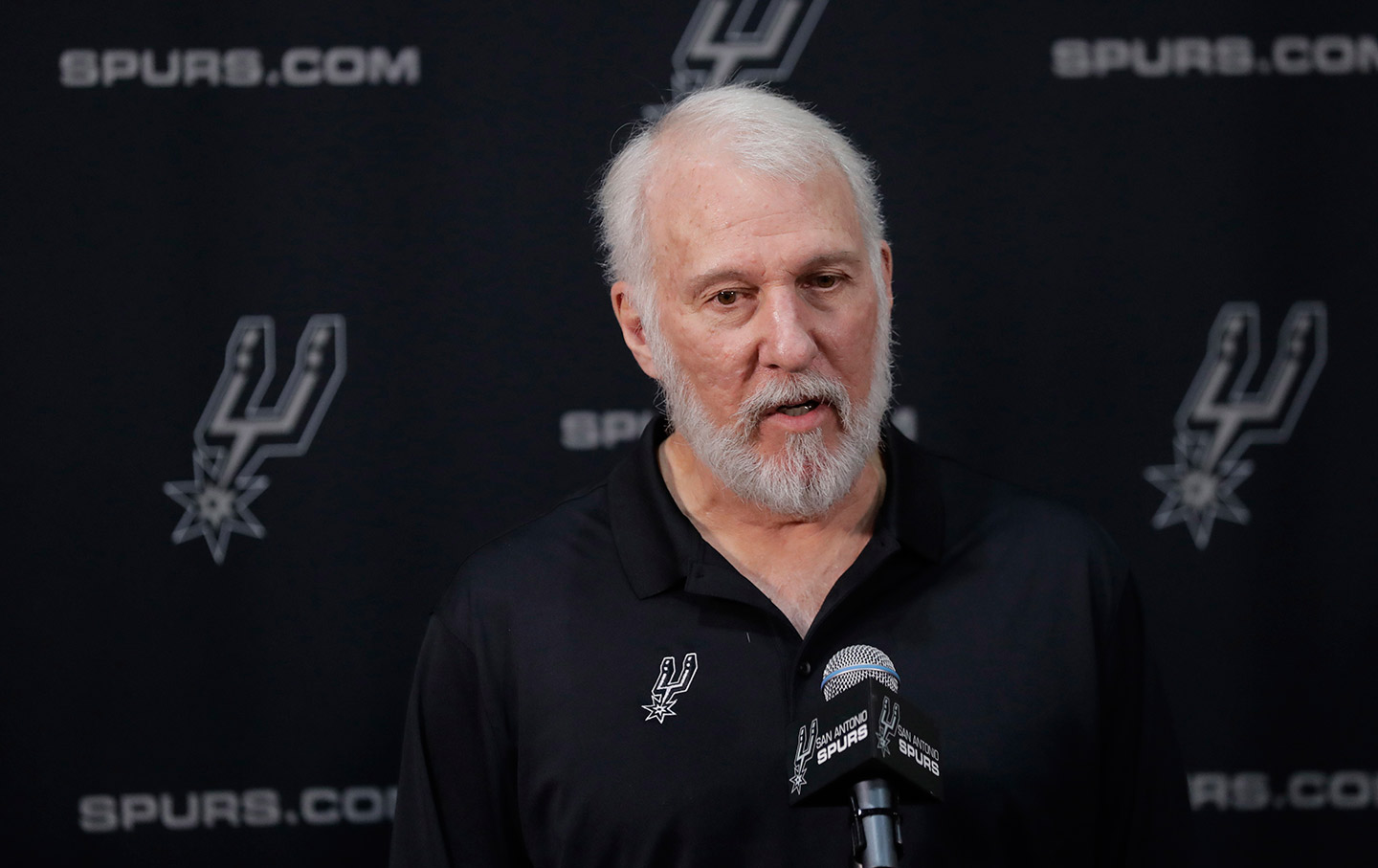
Image source: thenation.com
A lot of people speculate that the last few years of Popovich’s coaching career is nearing. This isn’t helped by the imminent retirement of Manu Ginobili, the departure of Tony Parker, and, of course, the whole drama that brought Kawhi Leonard to Toronto. Popovich also had to contend with the recent death of his wife. Yes, he may decide to call it quits soon. And that’s understandable. But his coaching legacy is already etched in stone.

Stephen Varanko III is an honor student and avid athlete who previously served as the captain of Randolph Macon Academy’s varsity lacrosse, cross-country, and basketball teams. For more info on Stephen and his interests, follow this link.


Tuesday, 31 July 2018

Gold starts in the kitchen: A cross-country runner’s diet

When training for a cross country race, it’s not enough to beef up your training regimen. For your body to keep up with the intensity of your routine, it has to be fueled correctly. Having the right diet can provide you with the energy you need to go the distance. Here is a diet plan you should follow when training for a cross-country event. 

Image source: livestrong.com

Although not considered as a meal, drinking more water is key to preventing cramps and fatigue during training. One needs to stay hydrated because one can lose about four to eight pounds of water per hour. For every pound lost during training, drink 16 ounces of water. 

Iron-rich food helps the circulation of oxygen throughout the body, an essential nutrient when building up your endurance. Some iron-rich food includes meat, fish, leafy green vegetables, whole wheat bread, and beans. And unless your doctor recommends taking iron supplements, avoid doing so. 

Carbs is what gives runners energy. Thus many athletes carbo-load a day or two before the event. When training, runners get most of their energy from complex carbohydrates. An excellent source of carbohydrates includes whole grain spaghetti, potatoes, and whole grain bread. 

During training, protein is necessary for the repair and recovery of muscles. Keep in mind that while you get most of your energy from carbohydrates, you also burn protein when you run. Protein-rich food includes meat, tofu, eggs, and low-fat dairy products. 

Image source: hindustantimes.com 

Stephen Varanko III has had an impressive list of academic, athletic, and leadership accomplishments since his high school years at the Randolph Macon Academy. He had also been the captain of the varsity lacrosse, cross-country, and basketball. For more articles on cross country running, visit this blog.

Friday, 20 July 2018

Gear Up: What To Wear For Cross-Country Running

In cross-country running, the terrains or environment can be unforgiving at times.  The right set of shoes and apparel is then essential to ensure that performance can be maximized, and injuries are prevented.

The following are what cross-country runners should pack inside their kit:

Cross-country shoes

Regular running shoes rarely provide the body the needed support, comfort, and grip in cross-country running.  Specialist cross-country shoes are better options because they are equipped with spikes, studs, or both.  The soles are also made of materials that allow better traction, which is more advantageous in wet conditions and shaped fittingly to protect the ball, heel, and toes of the feet.


High-quality socks

Blisters are one of the biggest problems in cross-country running, which can be prevented by using high-quality socks.  Socks can also serve to comfort and warm up the feet in cases of wet running terrain.

Sweat-wicking fabric

Just like any other physically taxing sports or recreation, cross country causes a significant amount of sweat.  Wearing a material not designed to pull perspiration away from the skin and let it evaporate more quickly can cause discomfort and contribute additional weight when running.  The apparel cross-country runners should wear needs to have excellent breathability.

Image source: theprospect.net

Stephen Varanko III was an avid athlete during his high school years, serving as the captain of his school’s lacrosse team and was a member of the cross-country and basketball varsities. Even with his active participation in extracurricular activities, he still excelled academically. Visit this LinkedIn page for more information about Mr. Varanko.

Sunday, 13 May 2018

Leadership 101: Great Leaders Are Made, Not Born

For decades, there have been discussions regarding the make of leader. Two schools of thought emerged from these talks, one saying that leaders are born, the other suggesting that they are made. Great leaders come from different walks of life, and they are not simply born with the ability to lead.

Image source: pixabay.com
 
It may seem that from the beginning of their lives, great leaders have already been leaders, such that everything they will be going through must be aligned to let them know they are onto something big. Warren G. Bennis, a prominent researcher in the field leadership, said that the most dangerous leadership myth is that leaders are born and that there is a genetic factor to leadership. He went on to state that “this myth asserts that people simply either have certain charismatic qualities or not. That’s nonsense; in fact, the opposite is true. Leaders are made, not born.” 

Leaders come in all shapes and sizes, and there are hardly any characteristics that predict leadership potential. Studies have found that individuals who are adjusted, ambitious, social, and curious are more likely to emerge as leaders, with IQ contributing less than 5 percent to the likelihood that a person would come out as a leader. 

Leadership is learned, just like any skill. Leaders are made through hard work, just like anything else. It does not come naturally, but one can become a leader through deliberate practice, followed by achieving excellence. Leaders are like experts, as they are developed through correct training, hard work, sacrifice, and regular self-assessment. 

Image source: pixabay.com

Stephen Varanko III has been involved in leadership activities since high school, having leadership positions in several athletic, extracurricular, and humanitarian organizations. For more posts like this, click here.

Friday, 6 April 2018

Making The Leap From High School To College Ball

Being a varsity basketball player in high school is often the launch pad for many pro athletes.  This is when they learn the fundamentals and develop the mental fortitude needed.  High school is where student-athletes are first tested.  If their academics are on point, and they impress the scouts, they make it to the next stage: college ball.


Image source: usatodayhss.com

College, however, is a different animal altogether.  The competition is tougher, and the pressure the athletes feel is much more stressful.  And when it comes to competition, it doesn’t just mean during games against other teams, it also means in the school itself.  Universities usually recruit more players than they need and cut the team before naming an official squad. 

And if that wasn’t enough, the academic requirements in college are much more difficult to complete, which means varsity players will have to spend double the time studying than they did back in high school. 


Image source: si.com

It’s a great leap, but it can be done.  Here’s how.

For starters, varsity athletes have to set a schedule for themselves and stick to it like glue.  There should be no room for “extra-curricular activities” if they want to pass their subjects and be successful in college sports.  Their schedules should also take into account all the time they need to rest their bodies and their minds to avoid burnout and meltdown.

Once they’ve disciplined themselves by sticking to their schedule, everything else will follow.

Stephen Varanko III has an impressive list of academic, athletic, and leadership accomplishments from his high school years in Randolph Macon Academy. For more on Stephen, check out this site.

Tuesday, 6 February 2018

Why Engaging In Extracurricular Activities Is Important In a Student’s Development

Image source: munplanet.com
Schooling doesn’t just mean doing things inside the classroom and learning from teachers. A lot of parents and students themselves should understand that engaging in extracurricular activities on campus immensely helps in gaining a more holistic education. Below are some of the main benefits of these supplementary activities.

First, extracurricular activities like high-endurance sports strengthen the mind, teaching students the importance of patience and resilience when faced with difficulties. Rigorous readings and problem-solving are given in the academe, but adding sports offers physical benefits that balance one’s routines: sound mind, sound body—and vice versa.

These activities help build professional skills that a classroom alone cannot always offer. For example, a debate club will enhance students’ public speaking skills, while a leadership-oriented club will help students learn management and delegation.

Extracurricular activities widen a student’s social circle, allowing them to spend time with others of similar interests, outside the given confines of classroom sections. From organizations and clubs to sports teams, students will look forward to going to school more if they have a variety of groups and friends.

Image source: isd194.org
Lastly, extracurricular work actually teaches students better time management skills. They become more conscious of planning and scheduling, of the importance of focus and dedication instead of procrastinating during long downtimes between classes.

Stephen Varanko III actively participated in many extracurricular activities at Randolph Macon Academy, serving as president of the student government and the honor council. He has handled various leadership positions since. For more insights on learning, visit this webpage.


Tuesday, 2 January 2018

Safety First: Protective Gear Needed In Lacrosse

Lacrosse is becoming more popular nowadays because of its fast-paced style of play. However, it is also quite physical in nature, which is why protective gear is essential when playing the game. The following are the equipment required in the sport:

Helmet: With checks common in lacrosse, as well as accidental hits from the sticks, a NOCSAE-approved (National Operating Committee on Standards for Athletic Equipment) helmet with facemask and mouth guard should always be worn to protect the head from minor injuries and concussions. Female lacrosse players are typically not required to wear helmets, but they need to wear goggles to protect the eyes.


Image source: und.com

Gloves: Gloves are also required to protect the fingers, hand, and wrists. The gloves should also help players get a good grip on the stick.

Shoulder pad: To protect the upper body, particularly the shoulders, a shoulder pad specifically designed for lacrosse should also be worn. As a further safeguard, elbow pads, full-arm guards, and rib pads can be used.

Protective cup: Male lacrosse players are required to wear a protective cup to protect the groin area from blunt trauma injuries caused by accidental hits from other players, sticks, or the ball.


Goalie protective gear: Goalies have a special set of gears because they are the most prone to being hit by the ball that can travel up to 100 miles per hour. In addition to the helmet, they should also wear throat protectors. And the gloves and body pads should have more padding than the regular ones.

Stephen Varanko III used to play lacrosse when he was studying high school in Randolph Macon Academy. He was even named the captain of the varsity team. Visit this page for more information about Mr. Varanko.